
If you’re a frequent-flier, you know the drill: you’re desperately trying to doze off with your head lolling on a neck pillow, when a flight attendant tells you it’s time to stow your tray tables and put your seats back in the upright position. But why? you wonder. How much difference could it possibly make?
These days, the seats on Delta and many other carriers only go back a measly two inches, down from four a few years ago. Given that the average width of an Economy Class seat has dwindled to just 17 inches, every extra inch counts for passengers. So it’s understandable to feel a bit indignant at having to move right as you were convincing yourself you were almost comfy.
It turns out though that there’s a good reason for why we sacrifice those precious few inches for takeoff and landing—and it has a lot to do with the way we measure airplane safety.
“In an emergency evacuation, a real one, where you’ve got the cabin filling up with smoke, you can’t have any factors that slow things down,” says John J. Nance, an aviation analyst who specializes in safety systems. “It just takes one person and one obstacle, which can include the seat back, and then you start bunching people up as you’re trying to get 150, 180 people out of an aluminum tube.”
[ Related: How do airplane toilets work? ]
Only 90 seconds
Since the 1960s, the U.S. Federal Aviation Administration (FAA) has ruled that a plane needs to be able to be evacuated in 90 seconds in order to be considered safe. That’s a tall order, particularly given how much less room present-day passengers have to maneuver. Despite some efforts to revise it, 90 seconds remains the gold standard with both the U.S. government and airplane manufacturers world-wide.
Part of why that 90-second rule feels unrealistic to some is that it’s tested under carefully controlled conditions. “It’s an artificial standard,” Nance says. “They used to joke and call it the ‘Boeing Athletic Club,’ since they’d test this standard with very fit people. We don’t really expect that it’s going to be 90 seconds in a real evacuation, but that’s what we can measure against.”
Of course, in a real airplane emergency, not everyone onboard is going to be an aspiring Olympic athlete. Most commercial flights carry small children, elderly passengers, and passengers with mobility issues. While there are plenty of variables the airline can’t control, it does its best to keep as many factors as close to test conditions as possible. “That includes having the seats in the upright position, as well as nothing that can tangle your feet up,” Nance says. “That’s why the flight attendants are thought to be so aggressive about it.”
How the seat mechanism works
Virtually every commercial airplane in the world uses the same mechanism to make sure that when you put the seat upright, it stays upright. “It’s not a mechanical lock, but rather a little hydraulic system,” Nance explains.
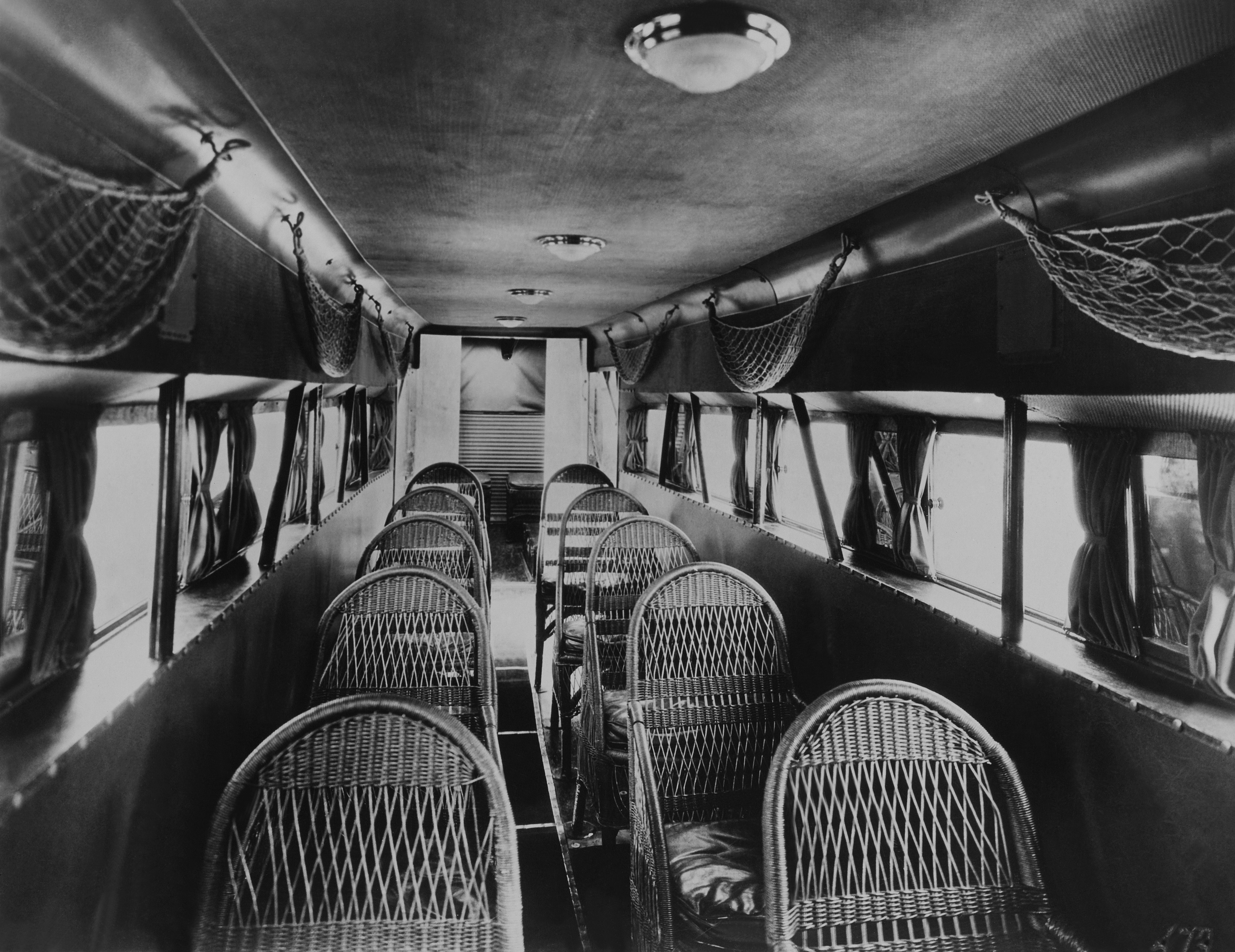
Commercial planes have evolved quite a bit since the early 20th century, when the seats were quite literally just wicker chairs crammed onboard. Yet even as other parts of the aircraft have changed, the hydraulic locking system that keeps your seat in place on virtually every plane is the same one they’ve been using since 1947.
The Hydrolok system was invented by P.L. Porter Co. and continues to be the industry-wide go-to, largely because it lasts for ages. According to current manufacturer Crane Aerospace & Electronics, a Hydrolok seatlock is good for about 250,000 cycles. Since most commercial aircraft are retired after around 30 years, those seatlocks rarely need to be replaced.
Protection for both airlines and passengers
Part of the reason airline safety testing standards haven’t changed in over half a century is there’s a certain “if it ain’t broke, don’t fix it” attitude. Sure, you could do side-by-side tests to see if leaving seats reclined makes a significant difference, but that risks rocking the boat. “It would clash with the spirit and intent of the way those things have been tested for a long time,” Nance says. “You’re getting back to the most dangerous phrase in aviation and there’s a sense that this is ‘the way we’ve always done it.’”
To be clear, the odds of passengers needing to test those safety features for themselves are low. According to an analysis by the Hearst Television Data Team, there have been a total of 87 fatal crashes involving commercial planes with 10 or more passengers in the U.S. since 1970. Still, making any substantial change to testing standards would expose aircraft manufacturers to serious legal risk in the event of an accident.
[ Related: Why do our ears pop on a plane? ]
“Every little thing you’re dealing with is a massive potential liability,” says Nance. “If anything happens, the plaintiffs’ attorneys are going to be screaming at you. So it’s no small matter either making a change or even proposing a change. And that’s why the manufacturers try to protect their airlines as best they can by standardization.”
That means that no matter what country an airplane is manufactured in, it adheres to the same set of safety tests. “The situation is that there are so many standards set by the manufacturer, Boeing for all of its airplanes, Airbus for all of its airplanes, Embraer, et cetera, that they become a worldwide standard,” Nance says. Changing any single factor would involve not only challenging the FAA, but governmental regulations in countries around the globe.
Let’s face it—no company wants to be the one to skirt tried-and-true safety standards when the stakes are this high. The same goes for individual passengers. Pushing your seat back up for landing might seem like a nuisance, but you don’t want to be the one to slow things down if anything goes wrong.
This story is part of Popular Science’s Ask Us Anything series, where we answer your most outlandish, mind-burning questions, from the ordinary to the off-the-wall. Have something you’ve always wanted to know? Ask us.
The post Why do we put seatbacks up for landing? An aviation expert explains. appeared first on Popular Science.
from Popular Science https://ift.tt/tVYZIxF


0 Comments