
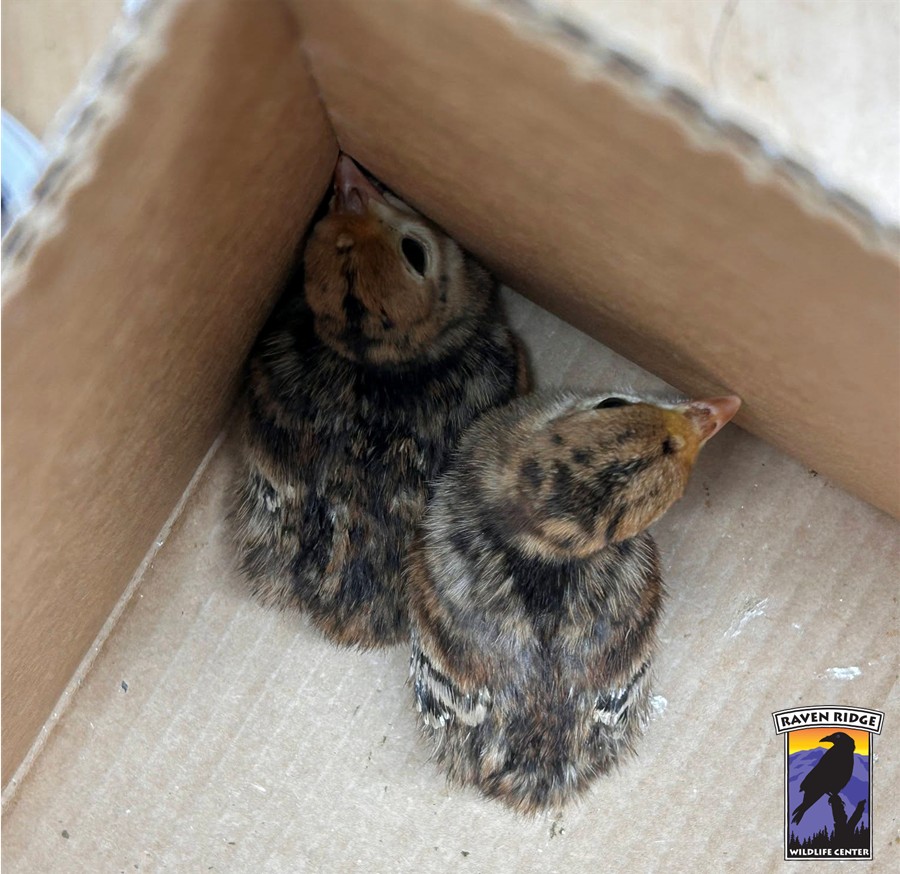
While turkeys are more associated with the fall, spring is the season of the baby turkey just like with most birds. When two turkeys were left without a mother, staff at Raven Ridge Wildlife Center in Pennsylvania resorted to a surprising replacement: a feather duster.
It might sound like a Disney-esque solution, but rehabilitation animals won’t start healing until they are relaxed, and these two chicks—just a day or two old—were very stressed. According to Raven Ridge’s Game Warden, a man found them running down the same road where their mother and a sibling were killed.
Turkeys are precocial birds, meaning they’re pretty independent soon after they hatch. Unlike baby blue jays or robins, turkey and pheasant chicks eat and move on their own. However, they do rely on their mother for warmth and protection. So when these two chicks arrived at the wildlife rehabilitation center in southeastern Pennsylvania, the staff put them in an incubator to keep them warm.
This particular incubator hosts a third presence. The staff put in a feather duster with the chickens, that they can hide under as if it were their mother.
“The incubator is nice and warm, which would be just like mom,” Tracie Young, director of the Raven Ridge Wildlife Center, tells Popular Science. “And to cut down their stress, the feather duster is hanging from the inside of the incubator. It’s more natural, more something that they’re going to recognize, and they’re able to hide under it. So it’s just like mom. It’s safety, it’s warmth. And that really does help with these animals in rehabilitation.”
Interestingly, Young and her colleagues also put pictures of adult turkeys in the incubator so that, in the absence of a real one, the chicks can still see a sort of adult role model. It’s not unusual for wildlife centers to resort to off-beat solutions for orphaned babies in rehabilitation. In 2024, wildlife care staff wore fox masks while caring for a juvenile red fox so that it doesn’t get used to humans.
Young says that when dealing with one or just a few ducklings at Raven Ridge, they give them adult duck decoys. As for turkey chicks, “a turkey decoy is not going to fit into an incubator,” she explains, so that’s where the pictures come in.
This isn’t the first time the team has reached for the feather duster in such a scenario, nor will it be the last. In fact, the wildlife center also just received another baby bird—its first ever ruffed grouse (Bonasa umbellus). That means they’ll have to procure another feather duster.
The baby chicks will likely be at the wildlife center until closer to the fall, when they’ll be returned to the wild. Once the birds become bigger and able to keep themselves warm, the team will transfer them into a larger cage and then outside. For now, however, the featherduster is helping.
“They were running out from underneath their duster, running back underneath the feather duster,” she says, “but we noticed, too, that after putting the feather duster in they were a lot calmer, they were eating more, and their weight is going up.”
The post Orphaned baby turkeys think a feather duster is their mom appeared first on Popular Science.
from Popular Science https://ift.tt/RVxFiKQ





0 Comments