
At roughly the length of a small school bus, anacondas are famously some of the world’s largest snakes. Now fossil evidence proves that these enormous reptiles are also glimpses of an ancient world. According to a study published on December 1st in the Journal of Vertebrate Paleontology, anacondas reached their maximum length around 12.4 million years ago—and have remained giants ever since.
Some of today’s largest animal species are puny compared to their Middle-to-Upper-Miocene megafauna ancestors. South America’s black caiman crocodile (Melanosuchus niger) grew up to 21 feet long, but about 16 million years ago, its Purussaurus genus relatives averaged a length of around 34 feet. Meanwhile, the freshwater turtles of the Stupendemys genus from nine million years ago featured over 10-foot-wide shells.
A number of factors contributed to the Miocene growth spurt, such as warmer and wetter climates as well as plenty of food to support large animals. But while evolution often eventually favored (relatively) smaller species, one group of snakes has stayed the same for millions of years.
“Other species like giant crocodiles and giant turtles have gone extinct since the Miocene, probably due to cooling global temperatures and shrinking habitats,” University of Cambridge zoologist and study co-author Andrés Alfonso-Rojas said in a statement. “But the giant anacondas have survived–they are super-resilient.”
Anacondas can sometimes reach up to 30 feet in length and thrive in semi-aquatic environments like the Amazon region’s marshes, large rivers, and swamps. But while the rainforest basin encompasses around 2.7 million square miles today, essentially all of northern South America featured similar habitats that allowed the snakes to flourish.
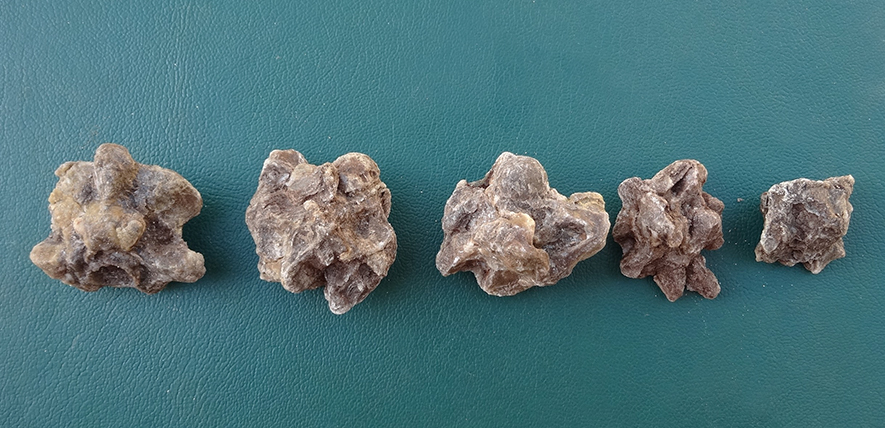
Knowing this, Alfonso-Rojas and colleagues examined 183 fossilized anaconda vertebrae from at least 32 different snakes collected in Venezuela. Combined with additional fossil data gathered across South America, the team determined Miocene anacondas routinely reached 13 to 16.5 feet long. This is virtually identical to adult anacondas of the present-day Eunectes genus. Prior to the new study, paleontologists weren’t entirely sure when in Earth’s history that the snakes first reached their imposing sizes.
The team also uncoiled an unexpected twist in the snake’s evolutionary trajectory. Basically, anacondas have always been the megafauna they are today.
“This is a surprising result because we expected to find the ancient anacondas were seven or eight meters [22.9 or 26.2 feet],” said Alfonso-Rojas. “But we don’t have any evidence of a larger snake from the Miocene when global temperatures were warmer.”
Anacondas have remained apex predators for over 12 million years and aren’t considered endangered, but that doesn’t mean they’re necessarily safe. Tropical rainforests may still support their size, but climate change and deforestation pose major threats. Without conservation efforts, the megafauna may finally meet their match in the near future.
The post Anacondas have been huge for over 12 million years appeared first on Popular Science.
from Popular Science https://ift.tt/Ze6aqAr



0 Comments