
Eggs are pretty incredible. They must be sturdy enough to keep the precious cargo inside safe, yet soft enough for a baby bird, crab, or snake to push through when the time is right.
Over millions of years, some egg laying species have evolved a wide variety of shapes, sizes, colors, and methods for laying them to ensure the survival of the next generation. Here, we break down three of nature’s most interesting egg laying strategies, from spongy blue crab eggs, gelatinous salamander eggs, and more.
Blue crabs and their amazing ‘sponges’
Blue crabs (Callinectes sapidus) go through a complex series of life stages. As larvae they live in coastal waters off the mouth of an estuary settling into the sea grasses in the brackish water near the Atlantic Ocean. As juveniles, blue crabs migrate: feeding and finding refuge in slightly less salty water in order to mature and mate. Mature females then migrate all the way back down the estuary to breed, only to go to the ocean to lay their eggs. At each life stage, blue crabs have to adapt to different habitats, predators, and risks.
Mature female blue crabs typically lay around three million eggs in a single brood—or group of eggs—produce six to eight broods per season.
“Blue crab eggs are round and yellow-to-orange in color due to being filled with [a] yolk that supports the development of the embryo into a larva,” Tuck Hines, a marine ecologist and scientist emeritus at the Smithsonian Environmental Research Center in Maryland, tells Popular Science.
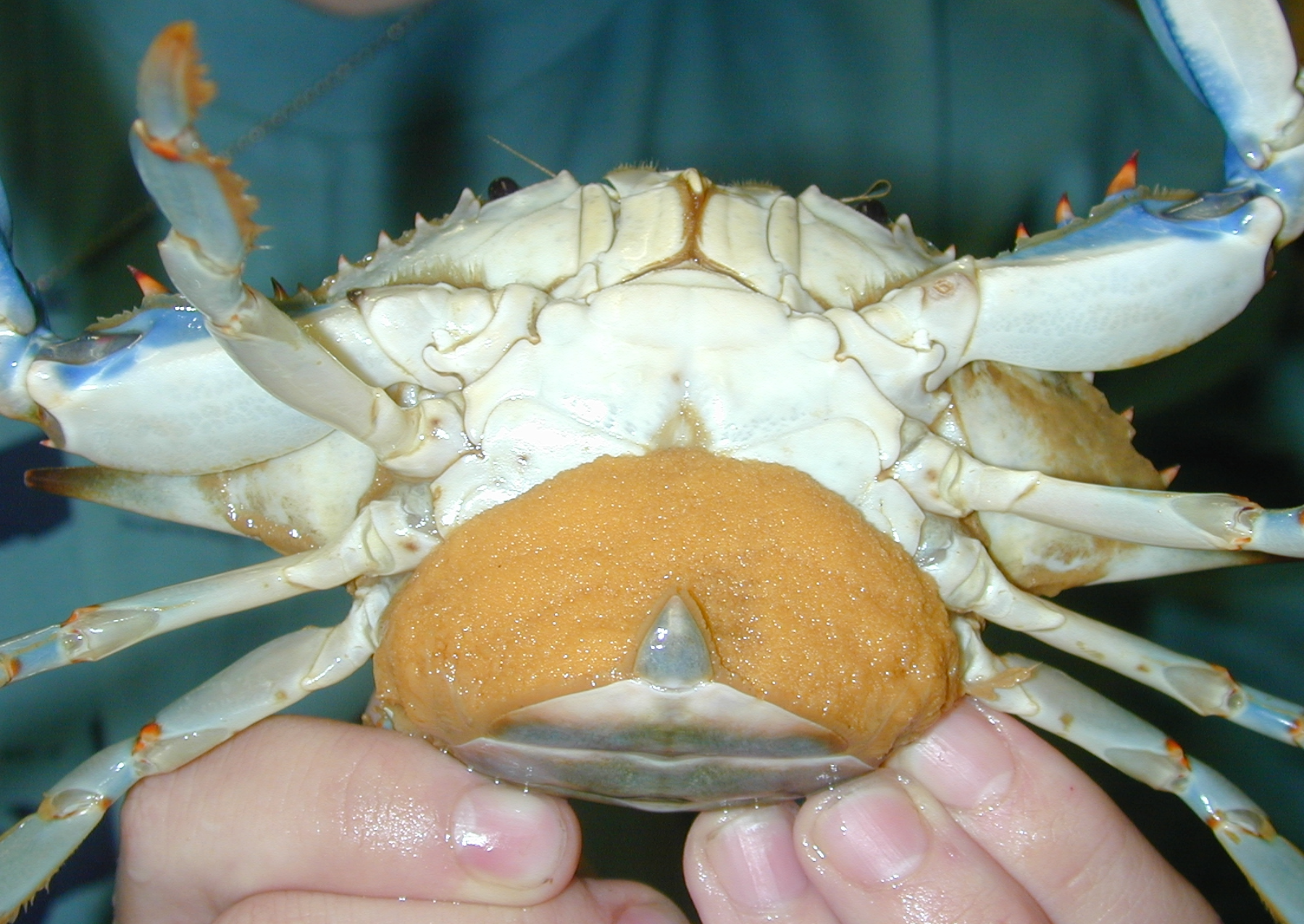
Each egg is attached to the mother crab by a stiff, bristle-like structure on her abdomen and folded under the rest of her body.
“She broods them [the eggs] for about two weeks until the larvae hatch and swim up into the plankton of the water column,” Hines explains.
Fishers in the Chesapeake Bay often call these egg broods “sponges,” due to their appearance. “As the embryos develop and use up the egg yolk, the ‘sponge’ turns dark brown to black, in part due to the dark eye pigment of the fully formed larvae,” Hines explains.
While blue crabs generally live in brackish water along the coast, females will migrate up to 150 miles—that’s the equivalent of driving from Boston to Albany—to the open Atlantic Ocean to lay her eggs. All of the sperm she will need to fertilize eggs throughout her entire lifetime—roughly one to four years—will come from just a single mating episode. However, there are some cons to their migratory life and mating style.
“It takes complex and precise coordination to link the processes of molting to maturity, mating, storing sperm, migrating, and overwintering before producing broods of fertilized eggs, and then incubating them to hatching,” says Hines.
Spotted salamanders and their great, green friend
Spotted salamanders (Ambystoma maculatum) live in the eastern half of the United States, where they have a pretty solid relationship with algae. The amphibians lay their gelatinous egg masses into spring pools that are full of green algae. That algae then makes it into the egg cases and turns them green like egg dye on Easter.
“The algae relationship is unique, even for researchers,” Karen McDonald, an educational specialist at the Smithsonian Environmental Research Center tells Popular Science. “The green alga Oophila amblystomatis doesn’t just live on the eggs. It lives inside the embryo’s cells, which makes it one of the only known examples of algae living inside a vertebrate’s cells.”
Oophila amblystomatis potentially gives the growing embryo a second source of energy and a direct supply of oxygen. At the same time, the salamander embryo gives the algae nutrients that they wouldn’t receive in the open water as well as shelter. Everybody wins!
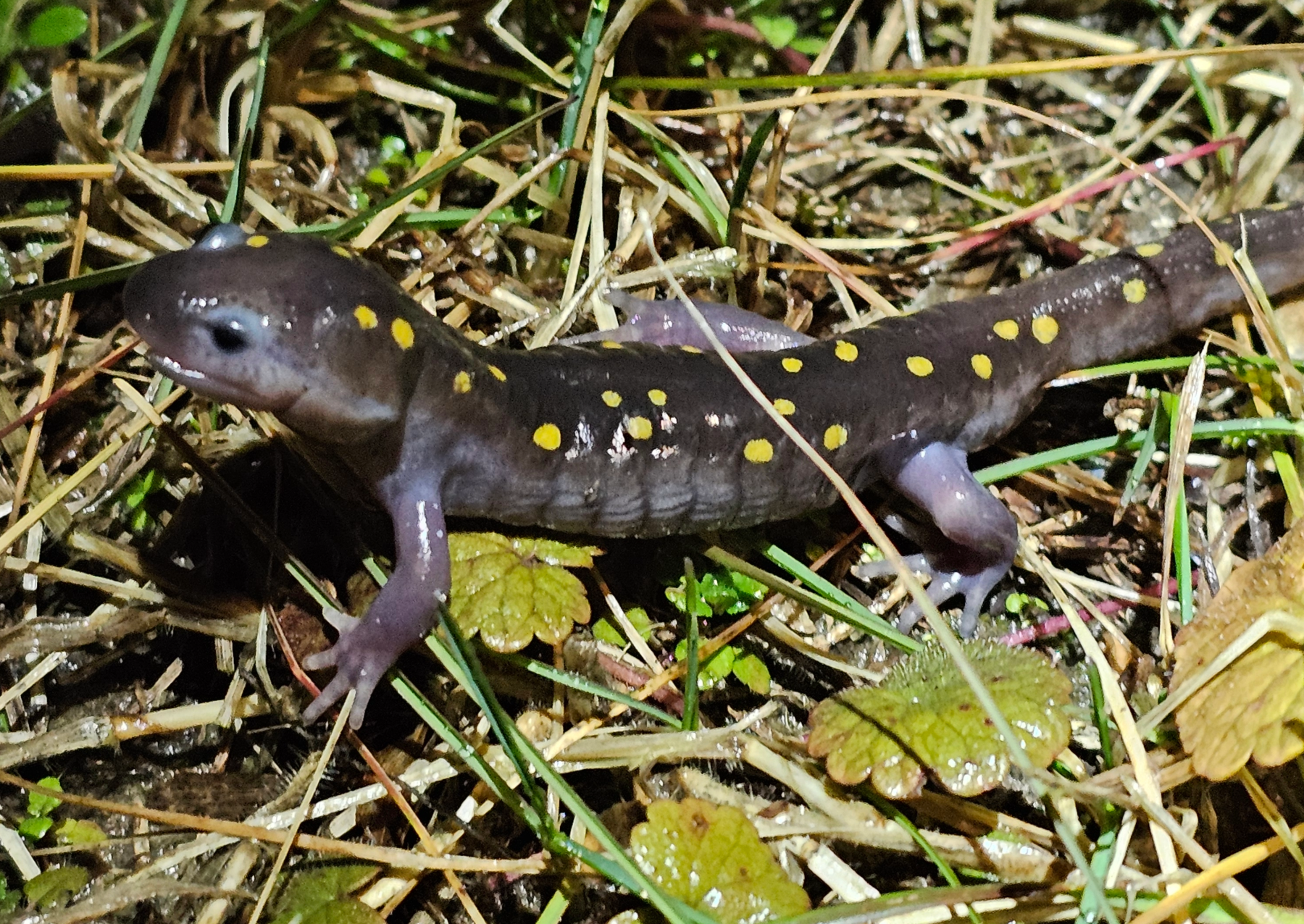
Frogs and salamanders lay their eggs in communal jelly masses that are attached to submerged sticks. The jelly protects the embryo from changes in temperature and also helps slow down anything trying to eat the eggs. However, the algae also helps keep the eggs safe.
“The green color of the egg mass does provide camouflage,” McDonald says. “But raccoons, wood ducks, water insects, and even some salamander larvae will still eat the eggs.” It’s a duck-eat-egg world out there.
Birds and their bevy of biodiversity
Bird’s eggs take center stage this time of year, as nests are built in trees and baby birds begin to hatch. In the wild, bird eggs are anything but boring and many are as colorful as ones that we humans dye for Easter.
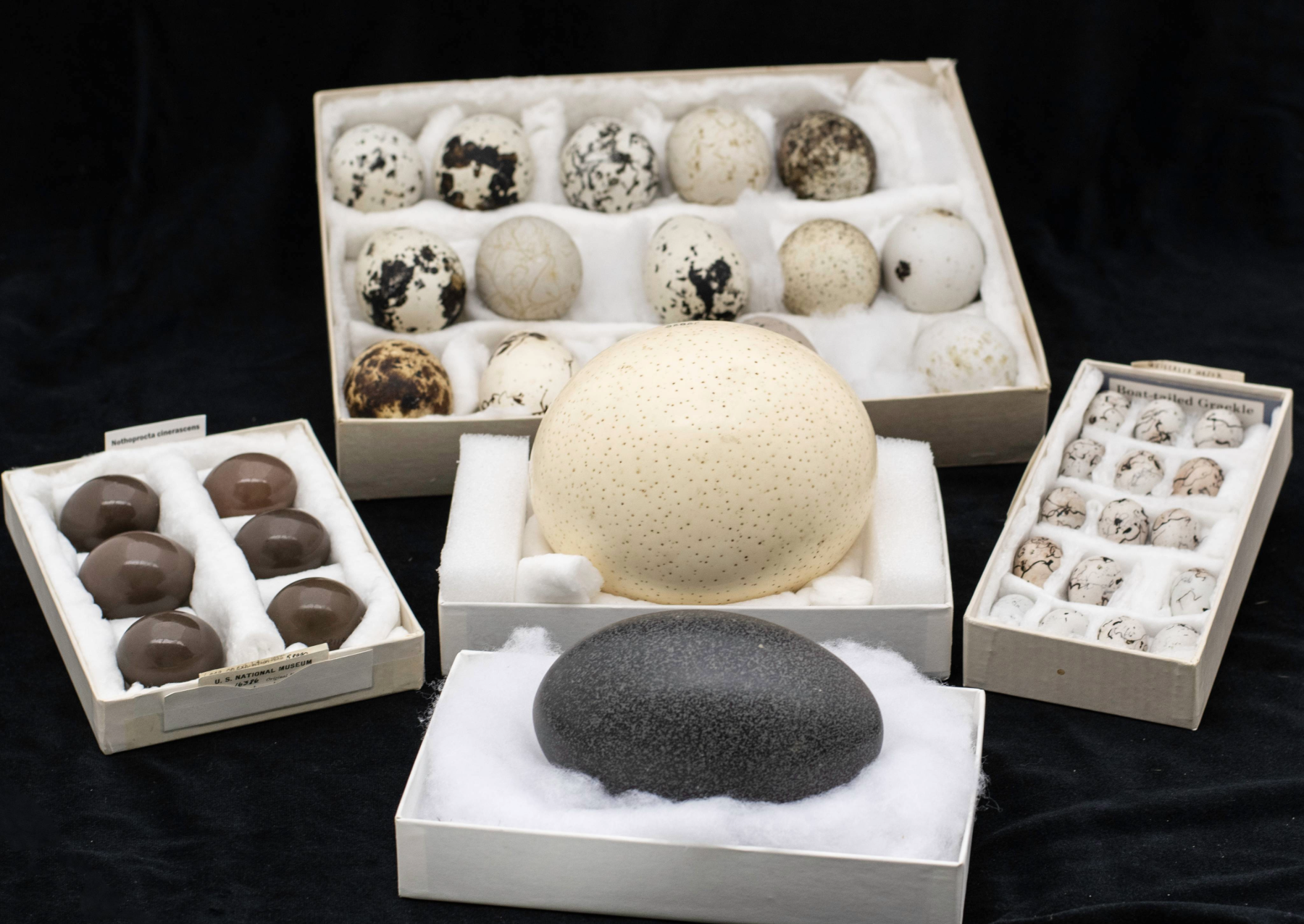
“Bird eggs come in many colors, sizes, and shapes because each species adapts its eggs to its environment,” Christina Gebhard, an ornithologist museum specialist at the Smithsonian’s National Museum of Natural History in Washington D.C., tells Popular Science.
“Eggs must be camouflaged from predators, stable in the type of nest where they’re laid, and able to support a developing chick. With nearly 11,000 bird species worldwide, this results in a wide variety of egg forms.”
Their tough shells are self-contained life systems, that help an embryo develop in any habitat, including the coldest and hottest places on earth. Native to Antarctica, Emperor penguins (Aptenodytes forsteri) are the most well adapted to icy conditions, and they keep their eggs warm by having dad sit on them while mom hunts for food. In North America, the tiny verdin (Auriparus flaviceps) is found in the incredibly hot Mojave, Sonora, and Chihuahuan deserts. These yellow-headed little birds have speckles on them that help them camouflage into their nests built at the top of thorny trees.
As far as size goes, ostriches (Struthio camelus or Struthio molybdophanes) lay the largest egg at almost six inches long and weighing upwards of four pounds. The bee hummingbird (Mellisuga helenae) lays the smallest at less than half an inch long, or the size of a jellybean.
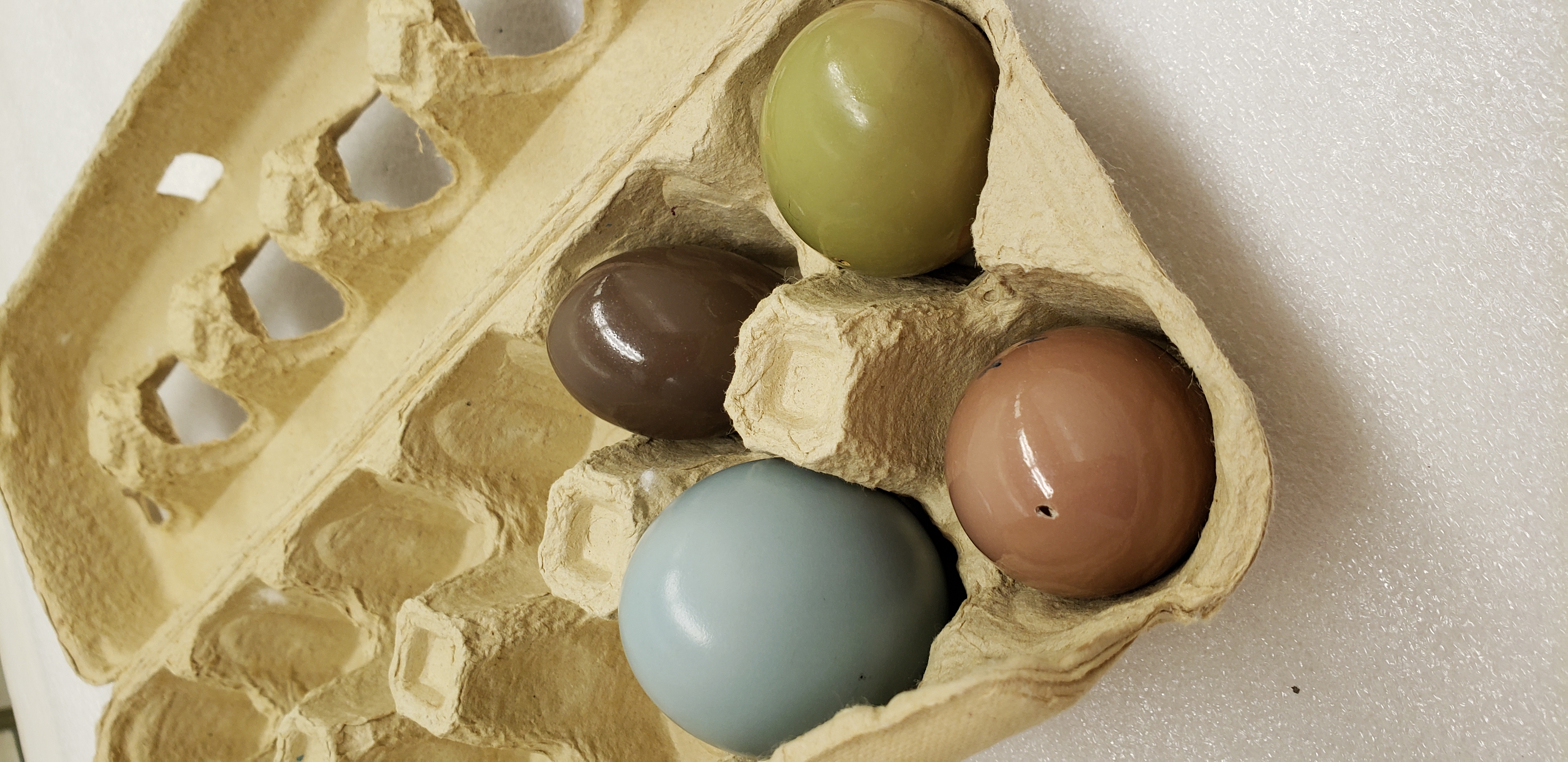
The American robin arguably has the most vivid color of any bird egg, with that signature blue-green hue. The color helps protect the embryo from damaging ultraviolet (UV) rays, but ornithologists are still not fully sure how the distinct blue-green color influences survival.
“But one hypothesis suggests that the vivid blue of an American robin’s egg may signal the female’s health, while darker‑colored eggs may help retain heat longer in colder environments,” Gebhard says.
The post Nature’s strangest eggs—from spongy clusters to gelatinous blobs appeared first on Popular Science.
from Popular Science https://ift.tt/ECuhoNP


0 Comments