
Who doesn’t love a brownie? It’s the ultimate comfort food—beloved around the world and even beyond it. Astronauts aboard the International Space Station have brownies on their menu too.
But what makes a perfect brownie? That depends on who you ask. Some like a light, cake-like crumb. Others want a dense, fudgy center or a chewy bite.
To tailor your brownies to your taste, you need to understand the science behind them. “Each ingredient has a specific role, and the ratios between them determine whether the brownie turns out fudgy, cakey, or chewy,” explains Dr. Lesa Tran, a chemistry professor at Rice University.
What each ingredient really does
Flour
Flour is the backbone of your brownie. When mixed with water, its proteins (gliadin and glutenin) link up to form gluten, a network that gives structure, explains Tran.
The more flour you add—and the more you mix it—the stronger that network becomes. The result? A lighter, more cake-like texture. Use less flour and mix minimally, and you’ll keep your brownies dense and fudgy.
Sugar
Sugar does far more than sweeten.
In the oven, it breaks down (or “caramelizes”) and reacts with proteins, a process known as the Maillard reaction. These processes create deep, complex flavors and aromas, says Tran.
Sugar also locks in moisture by binding to water, keeping brownies soft.
And that shiny, crackly crust? That’s sugar too. In the oven, sugar dissolved in the brownie mixture rises to the surface and re-forms into crystals, which create that signature crust, explains Tran.
For chewier brownies, use more brown than white sugar, Tran suggests. This adds more chew because it has more molasses (thick, dark brown syrup obtained from sugar beet and sugar cane plants).
If you want to cut back on sugar without sacrificing taste and texture, try using a finer sugar like caster sugar instead of granulated sugar. Scientists studied the effect of different sugar particle sizes on chocolate brownies and found that brownies made with smaller sugar particles tasted sweeter, and were also softer and moister than those made with larger sugar crystals. So if you want a fudgy brownie with less sugar, go for caster sugar.
Fat
Should you use butter or oil? Science has the answer.
A study comparing butter to nut oils (like almond, pistachio, or walnut oil) found that, compared to butter-based brownies, oil-based versions are softer, more elastic, and moister—and often preferred in taste tests. They’re also higher in heart-healthy unsaturated fats, and lower in unhealthy, saturated fat.
Whether you use butter or oil, more fat means a richer, fudgier brownie, says Tran.
Eggs
Eggs pull double duty, adding structure and richness. Like flour, they contain proteins that set when heated, giving structure to the brownie, explains Tran.
Egg yolks also contribute fat, making brownies richer and fudgier.
“Adding more egg whites provides more proteins to create a lighter, cakier texture,” says Tran, “while more egg yolks provide more fat to give a richer, denser result.”
Chocolate
What’s best: melted chocolate or cocoa powder? It depends on what texture you’re after.
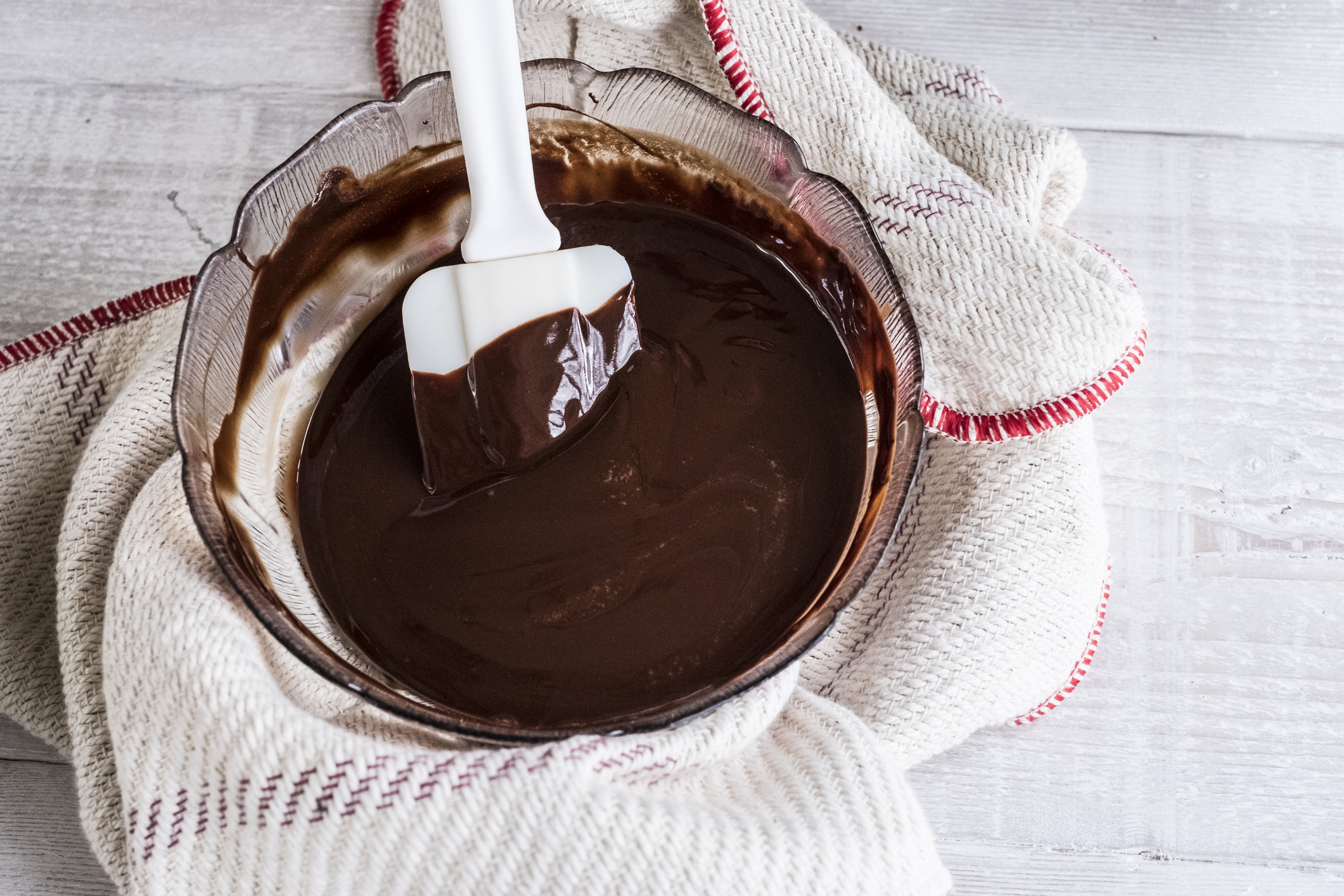
Melted chocolate contains cocoa butter, which solidifies as it cools—giving brownies a dense, fudgy bite. Cocoa powder, with less fat, produces a lighter, drier crumb.
If you use cocoa powder, choose wisely: natural cocoa is more acidic and sharp in flavor, while Dutch-processed cocoa, which is chemically treated to reduce its acidity, is smoother and mellower, says Tran.
Some people like to add chocolate chips to their brownies. The chips’ fat-crystal structure helps them hold their shape somewhat so you get little melty pockets inside the brownie, similar to what happens in chocolate chip cookies.
Related 'Ask Us Anything' Stories
The best chocolate chip cookie recipe, according to science
Are induction stoves better? These chefs think so.
Can one big meal really make you gain weight?
Is microwave cooking nuking all the nutrients?
What are ultra-processed foods and are they bad for me?
Does eating spicy food help you lose weight? Science has a clear answer.
Salt
A pinch of salt doesn’t make brownies salty—it actually makes them taste sweeter by helping your taste receptors detect sugar more effectively.
Leavening agent
Baking soda or powder introduces air into the brownie batter, creating lift and a cakier texture, says Tran. Skip them entirely if you want dense, fudgy brownies.
Science-backed baking tips
The kind of baking pan you use matters. Metal pans heat quickly, resulting in faster bake times and firmer brownie edges, says Tran. Glass and ceramic conduct heat more slowly and retain heat longer, which can lead to uneven baking.
How long you leave the brownies in the oven also affects the end result. Brownies continue to cook when removed from the oven—a phenomenon known as carry-over cooking—because of the heat held within the food itself.
“For a fudgy center, remove them when a toothpick inserted into the center of the brownie comes out with a few moist crumbs,” says Tran. “For a cakier center, remove them when a toothpick comes out clean.”
The bottom line
To create your perfect brownies, follow one of these formulas:
- Fudgy: less flour, more fat, more egg yolks, use melted chocolate, no leavening agents. Mix lightly and slightly underbake.
- Cakey: more flour, less fat, more egg whites, use cocoa powder, plus a leavening agent. Bake until fully set.
- Chewy: don’t skimp on sugar (brown not white!) and fat.
In Ask Us Anything, Popular Science answers your most outlandish, mind-burning questions, from the everyday things you’ve always wondered to the bizarre things you never thought to ask. Have something you’ve always wanted to know? Ask us.
The post The best brownie recipe, according to science appeared first on Popular Science.
from Popular Science https://ift.tt/pco4eGO




0 Comments