
In 1076, a Dutch nobleman named Duke Godfrey “the Hunchback” of Lower Lorraine was murdered in a most unusual way. Some medieval historians tried to describe what happened in polite terms by saying that Godfrey was attacked after he had “withdrawn.” What they meant was that he sat down to use the bathroom and an assassin hiding in the toilet speared him from below. Ouch!
Of course, your chances of meeting a similar end are pretty slim. But that doesn’t mean that doing your business is always safe. These are some of the strangest and most surprising ways that toilets have killed people.
Bathrooms have many hazards
The kitchen, with its sharp knives and hot stove, is often thought of as the most dangerous room in the home. But according to the CDC, up to 80 percent of home falls occur in the bathroom, due to the slippery, hard surfaces of tile floors and bathtubs.
In the U.S. alone, about 40,000 injuries per year are specifically related to toilets. People can get pinched by the toilet seat while getting up or sitting down, and under rare circumstances, toilet bowls may collapse under a person’s weight.
While statistics on toilet-related deaths are not specifically tracked, there are a number of ways that toilets can kill. Babies can drown in toilet bowls, and seniors can suffer serious falls after standing up from using the toilet, especially if they hit their head as they fall. Safeguards like bathroom handrails or locks on toilet lids can help reduce the risk of these incidents in homes.
At least some toilet-related deaths are from people trying to poop while constipated. Straining to poop puts strain on your heart, especially when you hold your breath while pushing (an action called the Valsalva maneuver). This can spike your blood pressure and even cut off oxygen flow to your brain.
To minimize risk, doctors recommend that you take chronic constipation seriously, especially if you have a heart condition. Some doctors also advise squat toilets as the healthier option overall. When you use a squat toilet, poop can pass more easily out of your body and with less straining than when you use a seated toilet.
Beware of pit toilets, especially if you’re meeting German nobility
Each toilet design comes with unique hazards. Before modern plumbing and sanitation, toilets were simply pits, dug as deep as possible and sometimes connected to underground water sources.
Historically, these long shafts and dark waterways could prove deadly to people who accidentally tumbled in. In places where pit latrines are still used today, such as parts of rural Africa, they remain a safety concern and an occasional cause of death, especially for children.
Perhaps the most dramatic example of the literal pitfalls of this type of toilet design occurred in 1184 at the cathedral of Erfurt in Germany. A meeting of nobles called by King Henry VI to settle a land dispute dissolved into chaos when the cathedral’s wooden floorboards collapsed.
Some 60 people plummeted through the floor into the latrine cesspit below, where they drowned in what became known as “the Erfurt Latrine Disaster.” The few survivors included the king and the local archbishop, who had been seated above floor level in a stone alcove.

A deadly WWII submarine toilet disaster
Aboard ships and submarines, faulty plumbing can easily cause water to leak into a vessel, and there have been subsequent cases of fatal drowning.
In 1945, a German submarine called U-1206 was sent to the North Sea, fitted with state-of-the-art plumbing that expelled waste into the surrounding ocean through a series of valves.
However, flushing the valve system was complex. After only eight days at sea, the young captain of U-1206 flushed incorrectly, causing the plumbing to backfire. Sewage flooded in and soaked the submarine’s batteries, releasing deadly chlorine gas that forced the crew to surface and evacuate.
Three men drowned trying to escape the sinking vessel, and the rest were captured by Allied forces: All because of a toilet.
Metal toilets can pose real risks
On at least two occasions, U.S. prisoners have died from electrocution due to metal prison toilets. One of these prisoners was Michael Anderson Godwin of South Carolina, who was convicted of murder in 1983.
In 1989, Godwin was fixing the TV in his cell while sitting on the toilet and placed a wire in his mouth, resulting in a fatal electric shock. In a bit of grim irony, Godwin had previously had his sentence reduced and avoided execution by electric chair.
Similarly, in 1997, Laurence Baker of Pittsburgh died of electrocution on his cell toilet, due to the current from homemade earphones he had plugged into the TV.
If you find yourself using a metal toilet, best to avoid electric devices altogether.
In 2016, a snake attacked from a toilet bowl
There’s probably not a human assassin lurking in your toilet bowl like the one who lay in wait for Godfrey. But what about a dangerous animal?
Rats and snakes have been known to crawl out of toilet bowls, especially after flooding or heavy rain, as rising water levels can force animals to take shelter in sewer pipes.
For instance, in 2016, a python bit a man using a toilet in Thailand. While such an attack might be painful and shocking, it’s still very rare, and very, very unlikely to be fatal.
Venomous spiders can lurk in outhouses
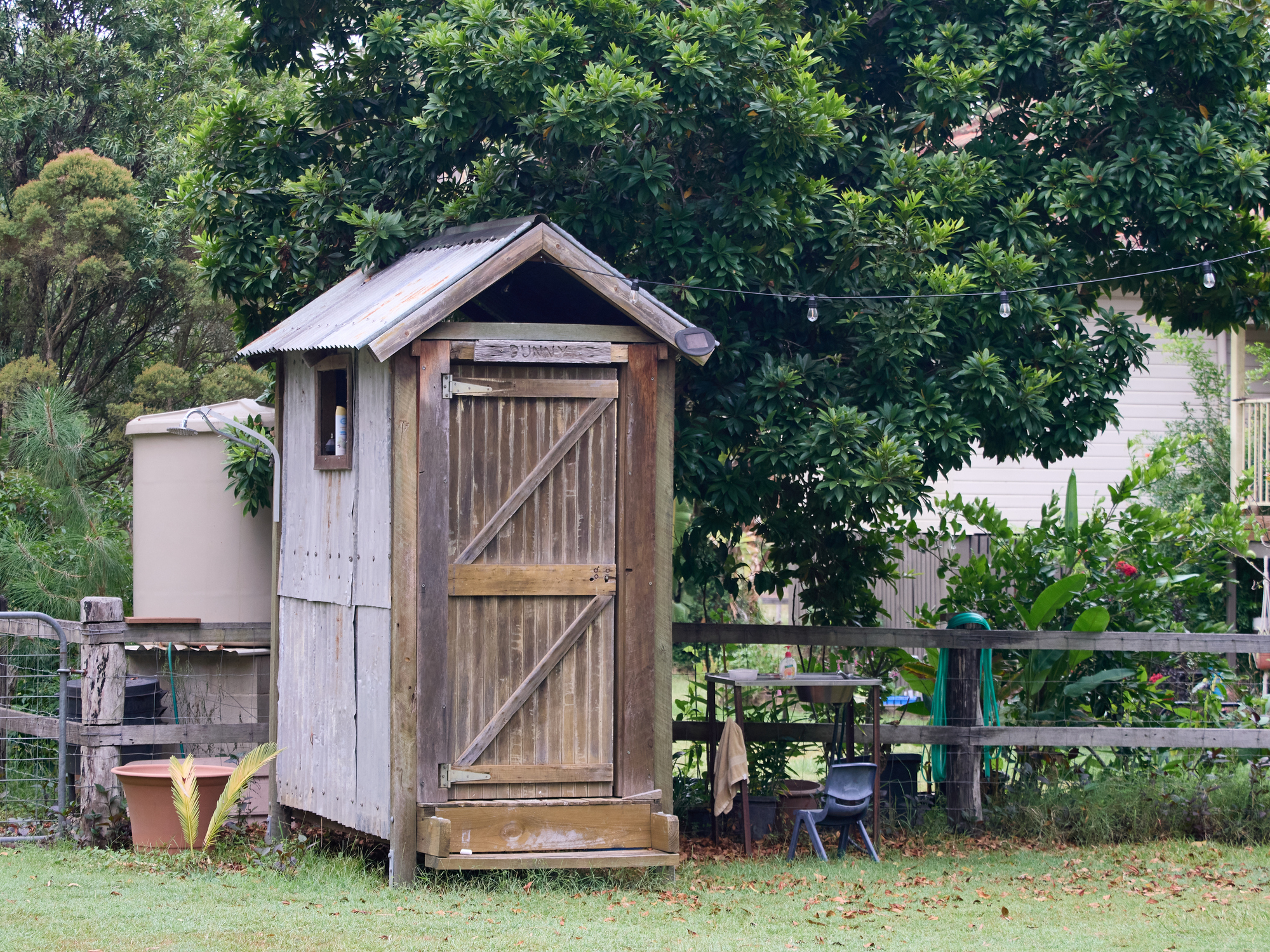
It’s best to exercise caution when using outdoor toilets because of a different kind of visitor. Attracted by the presence of flies, venomous widow spiders such as the black widow and its Australian cousin, the redback, are infamous for spinning webs under outdoor toilet seats.
Before modern indoor plumbing, the phenomenon of these spiders biting people who disturbed them was so common that it formed the focus of the earliest medical study on black widow bites. Published in 1927, the study noted fifteen such cases treated at Los Angeles General Hospital “in recent years.”
In 1971, Australian country singer Slim Newton even released a comedy song called “The Redback on the Toilet Seat,” with lyrics like “I didn’t see him in the dark, but boy, I felt his bite!” (Technically, only female widow spiders can bite people.)
While widow spider bites may lead to pain and infection, they are rarely fatal thanks to modern antivenin. The last known death from a black widow bite was in 1983. In Australia, a death from severe infection following a redback bite made headlines in 2016 because it was the first such incident in more than 50 years.
For the record, the 2016 redback victim was not bitten on the toilet. However, that same year, another man in Australia was bitten by a redback while using the toilet, on two separate occasions.
So next time you use an outhouse, lift the seat and check before sitting down—just in case.
In That Time When, Popular Science tells the weirdest, surprising, and little-known stories that shaped science, engineering, and innovation.
The post 7 ways toilets have killed people appeared first on Popular Science.
from Popular Science https://ift.tt/OxXnLQw


0 Comments