
I have a confession to make: In my late teens, my car ran out of gas along the Pennsylvania Turnpike. Rather than pump my own gas in PA, I’d been trying to make it across to neighboring New Jersey—a state that’s notoriously known for prohibiting self-service at gas stations—on an almost-empty tank. The truth is, I had no idea how to fill a tank on my own.
Since Oregon softened its laws back in 2023, New Jersey remains the only U.S. state in which drivers are not allowed to pump their own gas. Those of us from the Garden State often find the entire process of fueling up intimidating: so much so that we’re willing to run on fumes rather than work the pumps ourselves. My experience on the PA Turnpike was a learning one, for sure. But it left me with questions.
In order to tackle some of those questions, we at Popular Science asked both Dr. Michael Jerrett, a professor at the Department of Environmental Health Sciences at UCLA, and Thomas Wright, a spokesperson for the New Jersey Department of Labor and Workforce Development, to weigh in on New Jersey’s unusual law and the science behind it.
The origins of New Jersey’s ban on self-service
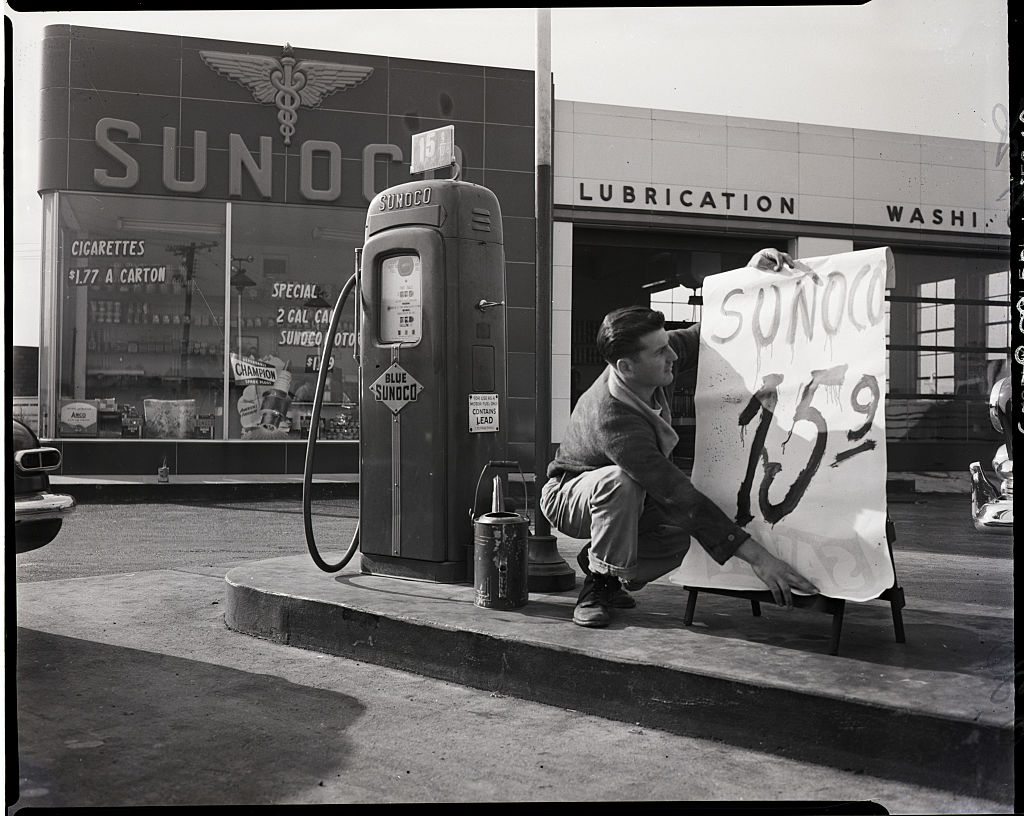
While the first dedicated, drive-in gas station opened in Missouri in 1905, it took until the 1970s for most states to switch over to self-service. They did so in part due to rising gas costs resulting from the 1973 energy crisis. Facing tight margins, gas stations realized they could lower their overhead by reducing staff and then pass that savings on to customers. In short, having patrons pump their own gas allowed gas stations to remain competitive.
To make the switch, these states had to modify their fire codes. This included installing emergency cut-off switches for all pump stations and heavily regulated latch-open nozzles (those notches that allow you to keep gas flowing without having to hold the nozzle yourself).
Two states held out: New Jersey and Oregon, primarily due to laws they enacted during the mid-20th century citing safety concerns, such as high fire risks and health-safety hazards, including exposure to toxic fumes.
New Jersey’s legislation prohibiting customers from pumping their own gas dates back to 1949. It’s known as the Retail Gasoline Dispensing Safety Act. Under New Jersey’s law, “trained attendants—rather than customers—handle the dispensing of fuel as they are required to know where emergency shutoffs are, recognize potentially unsafe conditions, and ensure that only approved containers are filled,” says Wright.
The health risks associated with pumping gas
While pumping gas is an act that most people (New Jerseyans excluded) do without thinking, there are health hazards associated with it.
“Basically, gasoline vapors include benzene,” a colorless, sweet-smelling chemical that’s highly flammable, says Jerrett, “as well as other volatile organic compounds,” which are carbon-based chemicals that evaporate into the air at room temperature.
These include toluene, ethylbenzene, and xylene—all used to help improve a fuel’s efficiency and stability as well as an engine’s performance. All of these flammable, colorless liquids are considered neurotoxic, meaning being exposed to them in large doses can cause headaches, fatigue, and even more severe symptoms like death.
But don’t get too worried, says Jerrett, since it’s the dose that makes the poison. Gas stations nationwide have gone to great lengths to limit our exposure to vapors at the pumps. “California, for example, uses rubber sealers around the nozzle for fueling,” says Jeffett. These prevent harmful gasoline vapors from escaping into the atmosphere during refueling, which protects not only the people at the gas tank but also the environment.
Wright says that prohibiting self-service also helps with overall general safety measures. “When customers pump their own gas, it’s simply harder to enforce basic rules like turning off engines or not smoking.”
Indeed, smoking or vaping both provide ignition sources that can be highly flammable at a gas station. It’s the same for vehicles that are left running. Turning off your car’s engine prevents heat from the vehicle’s exhaust inadvertently igniting gasoline vapors.
There’s also static electricity. This build-up of electrical charge (we’ve all felt that zap!) on the surface of an object often happens when you slide onto and off of your car seat. This can generate high-voltage sparks exceeding 1500 volts, which can easily spark a fire.
The best ways to avoid a zap are to not get back into your vehicle while you’re filling up and to ground yourself (try touching a metal part of the car away from the nozzle) if you feel a static charge.
Related Stories
Limiting your own exposure
For self-service patrons, there are things you can do to limit your exposure at the pump, says Jerrett. Avoid standing over the nozzle while filling your tank, or use the latch-open if it’s available and simply walk away. Higher wind speeds can disperse vapors more readily, so avoid pumping gas until the weather calms.
While fires at gas stations do occur, roughly three-quarters of them result from mechanical or electrical malfunctions—not from pumping gas. In fact, only about four percent of them begin with gasoline igniting, so the chances of starting a fire at the gas station are extremely slim.
Still, having a trained attendant pumped your gas is generally considered a safer option, since it reduces the risks of vehicles left running, static electricity, and consumers lighting up. It also keeps people who may be at higher risk for health complications—such as senior citizens and pregnant women—away from toxic fumes.
The benefits of full-service
In 2025, New Jersey had more than 1,900 gas stations and roughly 10,000 workers in the Auto & Watercraft Service Attendant category, which includes gas station attendants. “The law we’re tasked with enforcing prioritizes safety, accountability, and job creation,” says Wright. “Plus, the temperature is better in the car.”
Now, if they could just arrange a course in how to pump your own gas for those traveling out of state…
In Ask Us Anything, Popular Science answers your most outlandish, mind-burning questions, from the everyday things you’ve always wondered to the bizarre things you never thought to ask. Have something you’ve always wanted to know? Ask us.
The post It’s illegal to pump your own gas in New Jersey. But why? appeared first on Popular Science.
from Popular Science https://ift.tt/fpe8Xsq


0 Comments